- Official Google Enterprise Blog: More great apps for Google Apps
The Google Apps Marketplace is an online storefront where Google Apps customers can discover, purchase and deploy integrated business applications and related professional services.
Tuesday, March 09, 2010
links for 2010-03-09

Thursday, April 10, 2008
links for 2008-04-11
- Official Google Enterprise Blog: A Little Help for our Friends
New Marketplace for 3rd party products and services that work with Google products and APIs
Thursday, January 03, 2008
links for 2008-01-04
- Eight reasons SaaS will surge in 2008
Interesting take of what's driving ISVs to SaaS
- DataPortability.org - Share and remix data using open standards
Site promoting standardized data portability. "As users, our identity, photos, videos and other forms of personal data should be discoverable by, and shared between our chosen tools or vendors."
Saturday, December 29, 2007
Thursday, June 21, 2007
Yay! I'm a structured procrastinator
The fact that I just ran across John Perry's essay on Structured Procrastination (via pmarca), 12 years after it was first posted, proves there are still big opportunities ahead in search, collaborative filtering, and recommendation systems.
John's essay explains my daily existence, and how to turn a "bad habit" into an effective strategy:
John's essay explains my daily existence, and how to turn a "bad habit" into an effective strategy:
"This is the essence of what I call structured procrastination, anIt's short and concise -- definitely worth a read if you're not 100% satisfied with your ability to get things done.
amazing strategy I have discovered that converts procrastinators into
effective human beings... The key idea is that procrastinating does not mean doing
absolutely nothing...the procrastinator can be motivated to do difficult, timely and
important tasks, as long as these tasks are a way of not doing
something more important. Structured procrastination means shaping the structure of the tasks one has to do in a way that exploits this fact."
Thursday, December 14, 2006
links for 2006-12-15
- Patty Seybold - Google: The Camel's Nose in Business Software?
PREDICTION #1: Fast Adoption of “Google Apps for Your Domain” by Small Businesses
PREDICTION #2: Google Apps for Your Domain Becomes a Defacto Collaborative Platform for Cross-Organizational Teams
PREDICTION #3: Google Becomes the Winning Platform for customer-Led Innovation in Business Application Development
Thursday, November 16, 2006
links for 2006-11-17
- Amazon Rolls Out its Visionary WebOS Strategy
"WebOS services are going to be utilized by thousands of companies - and will power the next generation of web applications."
Friday, November 03, 2006
links for 2006-11-04
- Zopa (UK) - The first lending and borrowing exchange
Zopa is the first marketplace for lending and borrowing. Trustworthy people lend money directly to other trustworthy people – and by dealing with each other, rather than banks, they've formed a community of savvy, like-minded individuals.
Thursday, November 02, 2006
links for 2006-11-03
- Web office is about collaboration
"So, where don't Word and Excel compete well today? The very place that online tools shine: collaboration. Microsoft would like you to believe that that's why your enterprise needs SharePoint, but that's just another form of lock in and ignores that fact
- 6 Technical Barriers for Office 2.0
Offline Usage, Single Sign-On, Data Ownership and Privacy, Data Synchronization, Ease of Migration, Fragility of Aggregated Services
Tuesday, October 31, 2006
Monday, October 30, 2006
I'm Now a Googler
We announced some awesome news today: JotSpot has been acquired by Google!!
I can't think of a better way to accelerate our mission here at Jot than to join the amazing resources and people at Google, particularly for JotSpot developers.
I can't think of a better way to accelerate our mission here at Jot than to join the amazing resources and people at Google, particularly for JotSpot developers.
Tuesday, October 17, 2006
links for 2006-10-18
- Office 2.0 Not About The Online Spreadsheets -- But The Next Attempt At Situated Software
"One of these days, a company will figure out what that secret killer app is for this space, that makes it so just about anyone can easily understand and appreciate the value of being able to plug together an instant, useful, specialized app."
- Homophily in Social Software
"Social software designers first need to decide whether homophily (hang out with people who are like you) is a a feature or a bug... To break homophily, recommend something for reasons other than 'this meshes very tightly with your profile'... Doing th
- Flapjax
"Flapjax is a new programming language designed around the demands of modern, client-based Web applications."
Friday, October 13, 2006
links for 2006-10-14
- Office 2.0 Conference Wiki
- Will Google Office’s solution to the “offline” problem mean trouble for MS-Office?
It's interesting to think about a desktop service, maybe open source, that could be used by ALL web app vendors to solve the offline problem.
Thursday, October 12, 2006
links for 2006-10-13
- Blog Juice Calculator - Text Link Ads
- » Office 2.0, Enterprise 2.0, and other numerological mysteries | Between the Lines | ZDNet.com
- » Teqlo to let users assemble Web applications | Between the Lines | ZDNet.com
- Coghead
- Zoho Creator - Create Online Database Application in minutes. Build Forms, Collect Data and Manage.
- Is salesforce.com’s Apex just another procedural language?
- Stowe Boyd - Social Versus Collaborative Tools
- A micro-wiki for micro-ISV’s
- Incremental adoption sells SaaS to the enterprise
- Signal Without Noise--by Guy Kawasaki: Ten Questions with Polly LaBarre
- GigaOM » The Future of Social Networks - Communication
- JungleDisk - Reliable online storage powered by Amazon S3™ - Jungle Disk
- S3, Online Storage & BingoDisk
- THINK IT Services: Debating the Significance of Dreamforce 2006 on the SaaS Movement
- Soundflavor
Music mixes from your own collection. Looks great, exept I don't use iTunes...
Slideshare.net -- YouTube for PowerPoint
How many times have you heard, "will your slides be made available after the presentation?"
To the rescue comes Slideshare.net, a very slick presentation sharing service that helps folks get their preso word out quickly and easily. It's got tagging, most popular, recently added, and the rest of the stuff we expect in a sharing service. Think YouTube for Powerpoint.
To test it out I uploaded the PPT file I used to create a recent JotSpot developer tutorial. It worked flawlessly -- check it out.
While the original full tutorial includes voice-overs and animation thanks to Articulate presenter (would LOVE to see this capability added to slideshare.net btw), the ease of use and instant gratification of slideshare is very compelling.
To the rescue comes Slideshare.net, a very slick presentation sharing service that helps folks get their preso word out quickly and easily. It's got tagging, most popular, recently added, and the rest of the stuff we expect in a sharing service. Think YouTube for Powerpoint.
To test it out I uploaded the PPT file I used to create a recent JotSpot developer tutorial. It worked flawlessly -- check it out.
While the original full tutorial includes voice-overs and animation thanks to Articulate presenter (would LOVE to see this capability added to slideshare.net btw), the ease of use and instant gratification of slideshare is very compelling.
Saturday, September 30, 2006
BarBar at Zeitgeist

I'm sorry to say we've decided to shut down the Collaboration SIG, barely a year after we kicked it off. While we had some amazing speakers, truly interactive sessions, and healthy turnouts, in the end producing and promoting a monthly event proved more than our collective schedules could handle.
So what to do now? When do we get to go out and shoot the shirt about collaboration?
Eugene and I were talking and and couldn't come up with the answer. But we did decide there was only one way to come up with something: go drinking and figure it out. So we're heading to Zeitgeist this Tuesday (10/3, 7:30p) to enjoy the outdoor patio, various refreshments, and maybe even ... talk about collaboration.
Come join us if you want to hang out and talk shop -- we'll be in the back at a picnic table.
Oh yeah, since we're fans of barcamps and the like, and we will be having an ad-hoc gathering born from the desire for people to share and learn in an open environment that involves drinking, we've decided to call our little activity a BarBar. (And no, we won't be playing the web 2.0 drinking game...)
Hope to see you there.
Thursday, August 31, 2006
Fun Times with JotSpot's Solution Partner Program
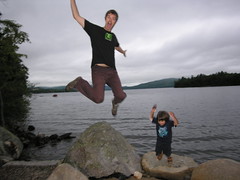
I'm typically a heads-down, OCDish kind of guy, particularly when it comes to work. Not prone to too much distraction, I often get lost in what I'm doing.
That said, the last handful of months have actually been more heads-down than most. I've resorted to shutting off my aggregator, not going out much if it doesn't involve my family or close friends, and staying up way too late way too often.
So what's up you ask?
I've actually been working heads down with a bunch of awesome folks conceiving an growing the JotSpot Solution Partner program, and man has it been fun. It's been a deep dive in collaboration on all levels, and has me firing on just about every cylinder work-wise. Here's what I mean.
Having Your Cake and Eating it Too
The fun starts with the basic mission of the program:
Partner with 3rd party developers to create custom collaborative software that 1) fits the customer like a glove and 2) can proceed from concept to launch in handfuls of weeks.The basic actors in this movie are:
- JotSpot, an amazing on-demand app platform based on the power of wiki. Jot lets you have your cake (a wiki) and eat it too (extensible dev platform).
- JotSpot customers of every variety. They bring their unique vision along w/enough need to justify paying honest dollars to make it happen.
- A growing set of JotSpot partners who enjoy the challenge and profit of rapidly turning these customer visions into production software.
At my ripe old age I've figured out a few basic ingredients that get me going at work. I'm basically equal parts technology, business, and people, all wrapped up in a tendency to over commit and an unreasonable attraction to challenge.
What's so cool about growing this program is that all three are rocking and rolling full tilt. Everywhere I turn there are little cycles of entrepreneurism happening, and as the program grows they're reproducing and enveoping each other at a rapid rate.
- Tech: Jot's kick-booty technology feeds the inner geek by letting us create custom collaborative products from top to bottom, no IT plumbing required.
- Business: Every new partner and customer discussion is grounded in the bottom line. We're conceiving, justifying, building, and launching a new product within a 3-way partnerships (Jot + partner + customer), multiple times a month.
- People: It's awesome to work with so many different teams at such a fast pace. We go from initial meeting to deployed solution in handfuls of weeks. This dictates a fluid and high communication approach, which of course allows us to eat our own dog food coordinating each project in Jot (more feeding of the geek factor).
Monday, July 24, 2006
Collaboration SIG Tonight: Johannes Ernst on Digital Identity
Johannes Ernst, founder and CEO of NetMesh, is speaking tonight at the Collaboration SIG on user-centric digital identity.
What's that you ask? Well join us tonight (Monday 7/24, 6:30p) at Pillsbury Winthrop in Palo Alto and find out. I've been hearing about digital identity for years but dont really have a clue about the details or implications beyond the headlines. Tonight's our opportunity to get all the goods:
collaborationsig
What's that you ask? Well join us tonight (Monday 7/24, 6:30p) at Pillsbury Winthrop in Palo Alto and find out. I've been hearing about digital identity for years but dont really have a clue about the details or implications beyond the headlines. Tonight's our opportunity to get all the goods:
"What is user-centric digital identity, and why does it matter? How willHope to see you there.
it affect our ability to collaborate more effectively in better, and
more dynamic environments? What services and features does it provide
that bear on collaboration within and outside of the enterprise?
Johannes Ernst will lead an interactive session describing the overall architecture,
the different technologies and projects, and the different players in
the space. He will describe the problems these technologies are
solving, their current status, and why and how you can get involved. He
will also lead a brainstorming session on the impact of these new
technologies on collaboration."
collaborationsig
Friday, June 30, 2006
April and May and June, Oh My!
I lived in San Diego from ‘88 through ‘02 — enduring 15 years of what San Diegans call, “June Gloom.” You know, that depressing month when the sun shines for only 75% of each day’s daylight hours… Sheesh, I never was so spoiled.
SF saw lots of sun and backyard beer drinking for me in June, so no gloom or any such complaints. I pretty much forget what was going on in April and May, but here are a few things I recollect…
 Launched JotSpot’s Services and Solution Partner Program. JotSpot is an application wiki, which means it’s a wiki platform meant to be easily extended, customized, and tweaked. Jot customers are increasingly interested in taking advantage of this capability, but some would rather hire than doing it themselves. From this demand and 12 months of under the radar engagements, the professional services and solution partner programs were born.
Saw Sigur Ros. One of my all time favorite bands, Sigur Ros, played in Marin (why Marin?). Another lovely and inspiring show.
 Went Camping in Big Basin. We spent a weekend amongst the redwoods with the other sf2020kids group families. Gotta love camping with a small army of kids 3 and under.
Mashpit II. Spent an afternoon at Mashpit II, brainstorming and working on a mockup of Walkapedia, a proposed community site for “user-contributed walking tours.”. My favorite idea from that day was actually the Lovendar project, which is a calendar specifically designed for helping families jive together.
Got acquired by Yahoo. Well, that was the rumor anyway.
 JotSpot powers eBay’s wiki. It’s very gratifying to see your product chosen to help eBay help their 193 million strong community say more on the web. Congrats to Scott Johnston and team for a job well done bringing the eBay wiki to life.
BlogHer Collaboration SIG night. Attendees of June’s Collaboration SIG were treated to a great night of learning, open discussion and debate with BlogHer co-founders Elisa, Jory, and Lisa. These three are doing something wonderful with BlogHer, and I thank them for sharing their stories about building a business around a grassroots community of women bloggers. Eugene sums up the evening nicely, and the podcast is here.
 Officiated a Wedding. My awesome friends Bart and Claudine had a beautiful wedding day in Big Sur. I was honored to be the officiant.
Planted a tree w/FUF. Who doesn’t love trees? We joined our neighbors and other Friends of the Urban Forest in the mission to bring more greenery to San Francisco. We planted a tree in front of our house and 4 others, contributing to a single day of 79 new street trees. FUF rocks!
 Watched Anaconda. These people watched this movie at Jot’s movie night #2. I now see why people say Anaconda was one of the most underrated movies of 1997 — the pairing of a 50 foot snake with an aging Midnight Cowboy was a real winner
Welcomed New Competitors. Competition notched up a bit as WetPaint launched their wiki service and DabbleDB launched their db-apps-on-the-web service. Both look like very nice products — JotSpot welcomes new competition and the visibility and innovation they bring.
Updated JotSpot Spreadsheet. Tracker, Jot’s collaborative spreadsheet app, saw version 2 ship with some killer new features, including improved forumla support and a slicker UI. Lots of spreadsheet on the web and spreadsheet-as-platform conversation lately.
Yep, time flies when you’re having fun. Speaking of San Diego, i’m looking forward to some R&R next week down south for our annual 4th of July family festivities.
SF saw lots of sun and backyard beer drinking for me in June, so no gloom or any such complaints. I pretty much forget what was going on in April and May, but here are a few things I recollect…
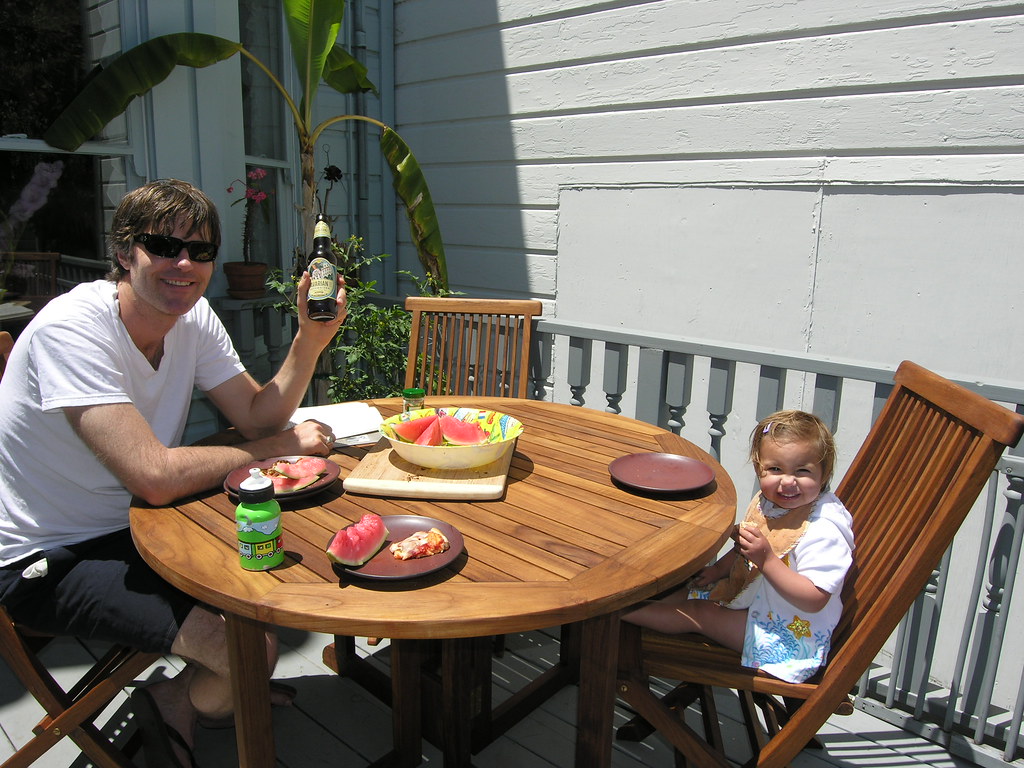 Launched JotSpot’s Services and Solution Partner Program. JotSpot is an application wiki, which means it’s a wiki platform meant to be easily extended, customized, and tweaked. Jot customers are increasingly interested in taking advantage of this capability, but some would rather hire than doing it themselves. From this demand and 12 months of under the radar engagements, the professional services and solution partner programs were born.
Saw Sigur Ros. One of my all time favorite bands, Sigur Ros, played in Marin (why Marin?). Another lovely and inspiring show.
Went Camping in Big Basin. We spent a weekend amongst the redwoods with the other sf2020kids group families. Gotta love camping with a small army of kids 3 and under.Mashpit II. Spent an afternoon at Mashpit II, brainstorming and working on a mockup of Walkapedia, a proposed community site for “user-contributed walking tours.”. My favorite idea from that day was actually the Lovendar project, which is a calendar specifically designed for helping families jive together.
Got acquired by Yahoo. Well, that was the rumor anyway.
JotSpot powers eBay’s wiki. It’s very gratifying to see your product chosen to help eBay help their 193 million strong community say more on the web. Congrats to Scott Johnston and team for a job well done bringing the eBay wiki to life.BlogHer Collaboration SIG night. Attendees of June’s Collaboration SIG were treated to a great night of learning, open discussion and debate with BlogHer co-founders Elisa, Jory, and Lisa. These three are doing something wonderful with BlogHer, and I thank them for sharing their stories about building a business around a grassroots community of women bloggers. Eugene sums up the evening nicely, and the podcast is here.
Officiated a Wedding. My awesome friends Bart and Claudine had a beautiful wedding day in Big Sur. I was honored to be the officiant.Planted a tree w/FUF. Who doesn’t love trees? We joined our neighbors and other Friends of the Urban Forest in the mission to bring more greenery to San Francisco. We planted a tree in front of our house and 4 others, contributing to a single day of 79 new street trees. FUF rocks!
Watched Anaconda. These people watched this movie at Jot’s movie night #2. I now see why people say Anaconda was one of the most underrated movies of 1997 — the pairing of a 50 foot snake with an aging Midnight Cowboy was a real winner Welcomed New Competitors. Competition notched up a bit as WetPaint launched their wiki service and DabbleDB launched their db-apps-on-the-web service. Both look like very nice products — JotSpot welcomes new competition and the visibility and innovation they bring.
Updated JotSpot Spreadsheet. Tracker, Jot’s collaborative spreadsheet app, saw version 2 ship with some killer new features, including improved forumla support and a slicker UI. Lots of spreadsheet on the web and spreadsheet-as-platform conversation lately.
Yep, time flies when you’re having fun. Speaking of San Diego, i’m looking forward to some R&R next week down south for our annual 4th of July family festivities.
Friday, June 23, 2006
Next Collaboration SIG: BlogHer -- From Hierarchy to Community
The next Collaboration SIG features BlogHer co-founders Elisa Camhort, Jory DesJardins, and Lisa Stone discussing BlogHer community and collaboration practices. In other words, "exploring ways that
organizations can collaborate with and set their organizations on fire,
building engagement and personal investment without descending into
anarchy or creating a pretense of democracy."
Should be a great night, props to my co-chair Patti Wilson for putting this together. Hope to see you next Monday night at 6:30 (June 26th) at Pillsbury Winthrop in Palo Alto.
Tags: collaborationsig, blogher, collaboration
organizations can collaborate with and set their organizations on fire,
building engagement and personal investment without descending into
anarchy or creating a pretense of democracy."
Should be a great night, props to my co-chair Patti Wilson for putting this together. Hope to see you next Monday night at 6:30 (June 26th) at Pillsbury Winthrop in Palo Alto.
Tags: collaborationsig, blogher, collaboration
Friday, March 31, 2006
March Madness of the Non-Hoops Variety
March 2006, a month that flashed faster than most weeks used to. Wow. Some random thoughts and happenings from the month that rained.
Windows Live. I’m watching with great interest as Microsoft’s Web 2.0 strategy unfolds. With Bill Gates pimping microformats and prepping Windows Live to expose its massive-scale services as a rich developer platform, things continue to get more interesting.
Sharing Calendars. The never-ending quest for a calendar solution for our family has a temporary home at 30boxes.com. Our main goal is to coordinate my events, as tracked in Upcoming.org, with our family events, as kept by Rebecca on her personal calendar. She’s agreed to use 30boxes because the interface is really intuitive and joyful. I like it because it sucks events directly from my Upcoming page. Our two calendars merged using their nifty overlay feature and the deal is sealed. (At least until I can eval Google’s calendar.)
Webtop Kudos. Speaking of 30boxes, it was nice to see JotSpot in good company on the Business 2.0 “Next 25” list in the Webtop category. Other category picks 30boxes, 37Signals, Writely, and Zimbra all kick booty.
Coworking. The search for a permanent coworking space is making progress here in San Francisco as well as in other cities. What’s coworking? I think of it as your favorite wifi coffeehouse, but with paid membership, more explicit community, and focus on project work and collaboration. I’m really impressed with the efforts of the crew pushing this forward. Check out the Coworking wiki for more info.
JotSpot. I’ve been blogging about tagging and email lists for wikis over at the JotSpot Developer Connection. The combo of tag, email, and event APIs in Jot are incredibly powerful. We’ve barely begun to put these to work. And when Comet goes core — oh man!
microISVs. I’ve been reading some microISV blogs, including microISV and ToDoOrElse. Software companies run by a handful of people fascinate me.
Gmail Archive. All the cool kids are doing it. Now I am too. I push and pull all my email through Gmail for a permanent archive of all Jot, Yahoo, and Gmail correspondance. Thanks for the step-by-step overview Abe.
Snow and Sisters. We went to Tahoe for a long, white weekend, and my sister Jackie came out to visit Vanessa and me in SF. Cool!
Music. Timing was finally right — got to see Arab Strap play at Cafe Du Nord. They’re one of my favorites of the past few years for sure. However I didn’t realize I listened to them so much until I started paying more attention to my long tail of music. Thanks a lot Last.fm, I’m now obsessed with tracking my own listening habits.
Windows Live. I’m watching with great interest as Microsoft’s Web 2.0 strategy unfolds. With Bill Gates pimping microformats and prepping Windows Live to expose its massive-scale services as a rich developer platform, things continue to get more interesting.
Sharing Calendars. The never-ending quest for a calendar solution for our family has a temporary home at 30boxes.com. Our main goal is to coordinate my events, as tracked in Upcoming.org, with our family events, as kept by Rebecca on her personal calendar. She’s agreed to use 30boxes because the interface is really intuitive and joyful. I like it because it sucks events directly from my Upcoming page. Our two calendars merged using their nifty overlay feature and the deal is sealed. (At least until I can eval Google’s calendar.)
Webtop Kudos. Speaking of 30boxes, it was nice to see JotSpot in good company on the Business 2.0 “Next 25” list in the Webtop category. Other category picks 30boxes, 37Signals, Writely, and Zimbra all kick booty.
Coworking. The search for a permanent coworking space is making progress here in San Francisco as well as in other cities. What’s coworking? I think of it as your favorite wifi coffeehouse, but with paid membership, more explicit community, and focus on project work and collaboration. I’m really impressed with the efforts of the crew pushing this forward. Check out the Coworking wiki for more info.
JotSpot. I’ve been blogging about tagging and email lists for wikis over at the JotSpot Developer Connection. The combo of tag, email, and event APIs in Jot are incredibly powerful. We’ve barely begun to put these to work. And when Comet goes core — oh man!
microISVs. I’ve been reading some microISV blogs, including microISV and ToDoOrElse. Software companies run by a handful of people fascinate me.
Gmail Archive. All the cool kids are doing it. Now I am too. I push and pull all my email through Gmail for a permanent archive of all Jot, Yahoo, and Gmail correspondance. Thanks for the step-by-step overview Abe.
Snow and Sisters. We went to Tahoe for a long, white weekend, and my sister Jackie came out to visit Vanessa and me in SF. Cool!
Music. Timing was finally right — got to see Arab Strap play at Cafe Du Nord. They’re one of my favorites of the past few years for sure. However I didn’t realize I listened to them so much until I started paying more attention to my long tail of music. Thanks a lot Last.fm, I’m now obsessed with tracking my own listening habits.
Sunday, February 26, 2006
Tonight: Jeff Conklin on Dialogue Mapping to Solve Wicked Problems
UPDATE: due to the flood warnings in Marin county, we have cancelled Jeff's presentation tonight and will need to re-schedule. Very sorry!
Jeff Conklin is speaking tonight at the SDForum Collaboration SIG on Dialog Mapping and how it can help us solving "wicked problems."
If you've ever participated in a meeting that went nowhere and would like to improve, you need to know about Dialog Mapping.
Come on by Pillsbury Winthrop (2475 Hanover st. in Palo Alto) from 6:30 to 9p tonight and learn from this lively and interactive session.
Friday, February 24, 2006
Groupware 2.0: SF Tech Sessions Kicks off with Joyent and Zimbra
Niall’s first SF Tech Session last night was a hit. Oh so glad to have this kind of event in the city rather than the peninsula. It’s now a recurring event on my calendar, and I encourage anyone nearby to check it out next month.
Speaking of calendars, last night’s session brought three Groupware 2.0 startups in for a smackdown, er, joint presentation: Kerio, Joyent, and Zimbra. Robert Anderson and Tom Bridge have comprehensive summaries of each presentation. Here’s my take.
At their heart, all three are vying for their piece of the Groupware market, currently dominated by MS Exchange, IBM/Lotus, and Groupwise (having 93% of the market combined). But one level down, these startups take very very different approaches.
» Kerio is an Outlook/Exchange clone for the web, and looked very nice as far as Outlook clones for the web go. But really not interesting in 2006 from where I sit.
 » Zimbra is open source and wants to be the Linux of Groupware, They started off boasting of their 100,000 seat deployment to H&R Block, and after the demo I can see why they’re getting that kind of traction so soon after launch 6 months ago. The app (web client + server) is incredibly fast, ajaxy-interactive, and in general a well thought out integration of shared email, calendars, and little apps called Zimlets.
A Zimlet is a better, Ajaxy versions of a Zaplet. Zimlets allow integration with external systems at both the client and server. Code runs on the server to do the heavy-lifting of connecting to web services etc., but the real joy is their approach to client integration.
From the demo, client integration happens in two ways. First, Zimlet icons can accept email and calendar drag-n-drop events to kick off the appropriate activity based on what was dropped.
The second method is more tasty. A Zimlet can parse your email content and present previews and links based on the info it recognizes as interesting. They demoed recognizing addresses to pop up Y!Maps and recognizing PO numbers to automagically pull in PO info from an external order entry system. This was more than read-only integration — the popup presented an “approve” button to allow the user to take action.
Suffice to say I was impressed, and it beats the pants off the webmail.us service we’re using at JotSpot. I hate that thing.
Zimbra is about to announce hosting partnerships, so look out for that.
 » Joyent, in contrast, is Groupware 2.0 for small teams. Zimbra’s 100,000 user deployment pitch is very different than Joyent’s pitch as a hosted service with an offering that maxes out at 25 people. Want 50 people? Buy two 25–packs for now. (Note: they’re working on alternate approaches to this limit, or you can buy and host your own “Accelerator” appliance). Question the approach, but I admire a company that knows its target customer and sticks to it.
Of the three, Joyent definitely impressed me the most from a product perspective for two reasons.
First they’re evangelizing “cubicle security”, aka everything is open by default. The premise is that small teams work better when they share their inbox/calendar/people/files/pages, so why not default to “shared” rather than closed?
This worked for Flickr, but the jury is out if this works for your team. They claim it works for current customers, and I actually agree in theory (except for the inbox part). This default-to-public of course affects the interface in all sorts of subtle ways, which is one of the reasons it feels like a fresh, innovative product. (Note: you can privatize anything — it’s just not the default.)
Second is the interface itself. It’s very well laid out, and the mail/calendar/people/file/pages/??? tabs all share an integrated look and feel and set of interaction metaphors. For example they’ve gone hog-wild and made everything possible an RSS feed, and have taken a blogish comment approach to the reply-all email thread nightmare. You don’t reply, you just comment. I can see these things being the right approach to integrating this suite of apps.
It will be interesting to see where Joyent take this as a platform. Their Ruby on Rails foundation, combined with their underlying hosting service (Textdrive) hints at interesting extension and partnership possibilities. I wonder where they’ll take the core mail/calendar/files interface next…
tags: collaboration, joyent, kerio, groupware, sftechsessions, zimbra
Wednesday, February 22, 2006
Mashup Camp: Another Successful User-Generated Conference
Mashup Camp was a total success and a lot of fun. It was great example of a user-generated conference — they really held true to the camp/unconference format. This despite having 300+ people and what appeared to be a healthy amount of cash and in-kind sponsorships. Congratulations to David, Doug, , Kaliya, Mary, Doc, and their team.
Building on many sources of inspiration, this camp’s success was based on how they found a way to give just about every attendee a chance to share. The format alternated between all-hands-on-deck sessions, which gave 30 seconds of mic time in front of the entire audience, and appropriate time and space to gather and dig deeper. For example:
I attended great sessions on business models, rapid app dev of mashups, and mashing wikis among others.
But the real action was the speed geeking. I saw 15 mashup demos and each one impressed me in a different way.
 Danny Markham mashed up EVDB to show you where your favorite bands are playing.
 The Mozes crew let you control a Flickr slideshow by sending tags via your cell phone.
 Anurag Nigam of Partysynch. Organize parties with your mobile phone.
 David Quiec of Rrove. del.icio.us for locations/maps.
 David Schorr of weatherbonk and skibonk. Microclimates and maps (a favorite).
 Stewart Nickolas of QEDWiki. IBM’s version of a JotSpot Wiki (very nice).
 Robert Metcalf with FlySpy. Buy airline tickets by finding your spot on the price curve.
 Daniel and Taylor McKnight Podbop.org. Music and events and mp3’s (contenst winners!)
 John Herren of Tagcloud.com and Mastrbeta.com. Get tag clouds and get notified of secret betas.
 Chris Radcliff of EVDB. There ware a bunch of EVDB-powered mashups.
 Chao Lam of ClipClip. del.icio.us for copy/pasted web page clippings.
 Adam Trachtenberg with DudeWheresMyCar. Fun eBay/maps mashup.
 Brad Hintze of Bungee Labs. Mashing up Salesforce.com, MS Exchange, maps, and a bunch of others.
 Adrian Holovaty showing Chicagocrime.org. Crime + maps mashup. (My favorite – check it!).
 Brian Richer with RunningAHEAD.com. Mashup your exercise or health training program.
And to think I missed 12 others. There were a lot of mashups on display, and I was struck by their overall quality.
From the poll I took, the majority of these were started as hobby sites or to scratch an itch, and have evolved to become either resume sites or sites w/enough traffic that they’re looking to mine some ca$h.
One mashup I demo’d around a bit was a JotSpot Tracker / Upcoming.org / Last.fm mashup that alerts you to touring bands you’re listening to. It’s is a Tim and Abe production and is very cool, but we weren’t quite ready to show it widely yet.
There’s already a signup page for the next mashup camp, details TBA. Attend if you can!
Building on many sources of inspiration, this camp’s success was based on how they found a way to give just about every attendee a chance to share. The format alternated between all-hands-on-deck sessions, which gave 30 seconds of mic time in front of the entire audience, and appropriate time and space to gather and dig deeper. For example:
- API providers/enablers announced their wares, and could then grab a table and put up a sign for followups.
- Folks interested in leading a session on their pet topic were given the mic, and then given a free slot on the schedule. (They had a lot of rooms!)
- Mashup devs pimped their mashup to the entire audience, and were then given a table and ample speed-geeking time for demos. The speed-geeking (think speed-dating for demos) ensured folks saw lots of demos in a short period.
I attended great sessions on business models, rapid app dev of mashups, and mashing wikis among others.
But the real action was the speed geeking. I saw 15 mashup demos and each one impressed me in a different way.
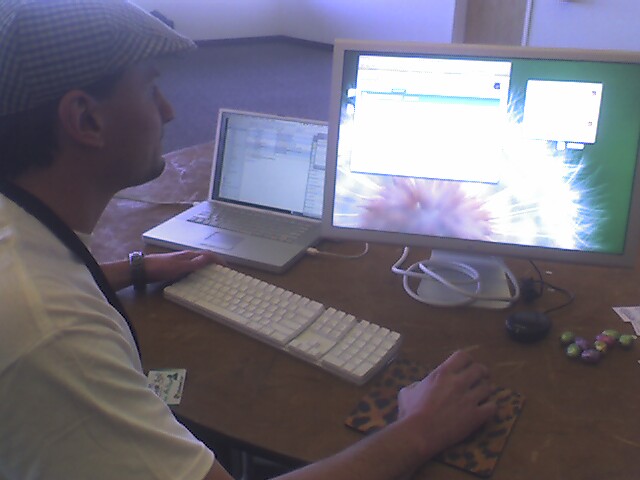 Danny Markham mashed up EVDB to show you where your favorite bands are playing.
 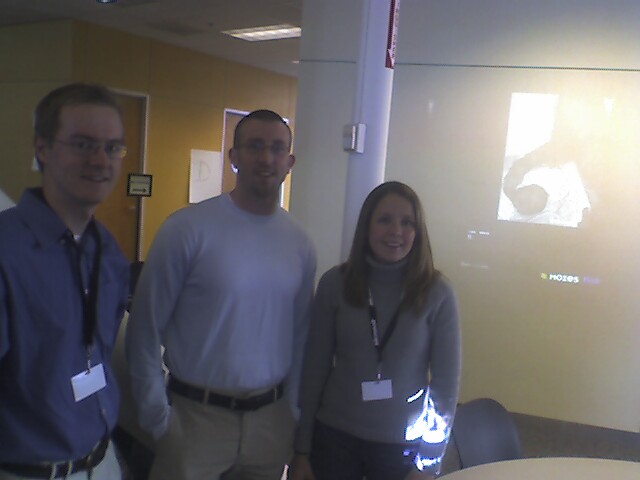 The Mozes crew let you control a Flickr slideshow by sending tags via your cell phone.
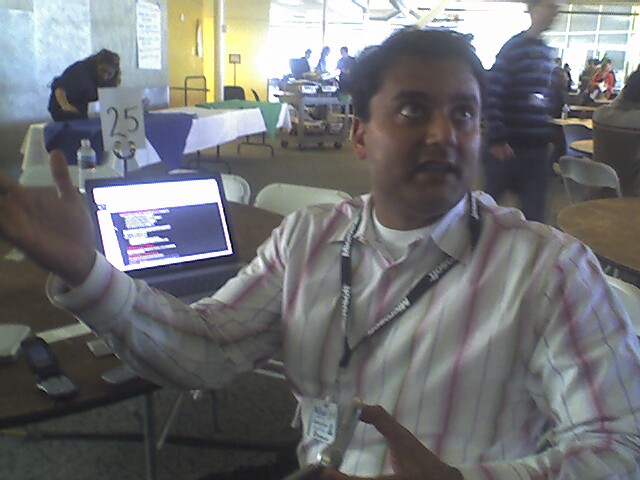 Anurag Nigam of Partysynch. Organize parties with your mobile phone.
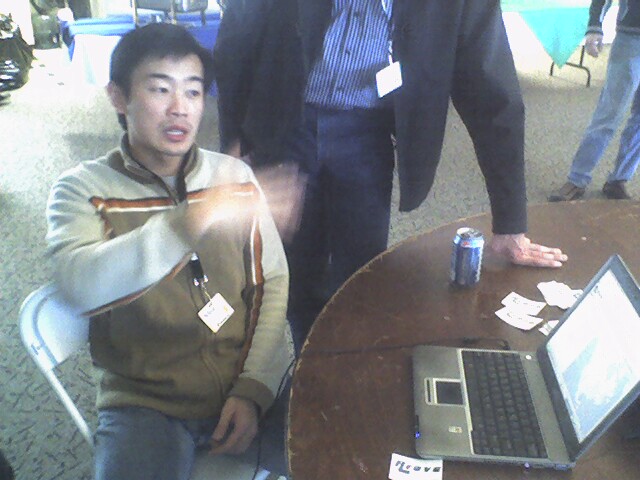 David Quiec of Rrove. del.icio.us for locations/maps.
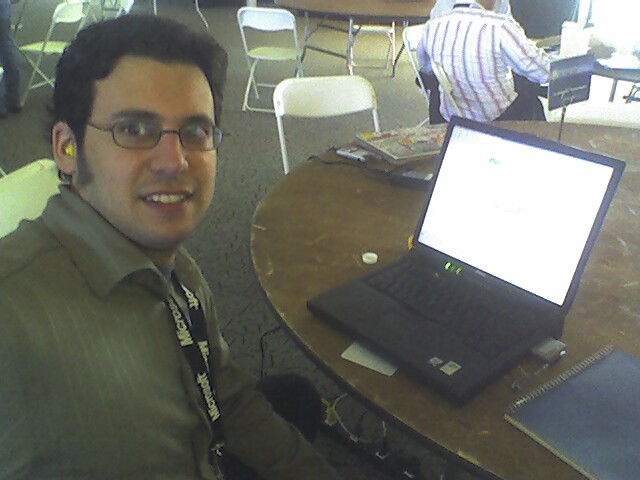 David Schorr of weatherbonk and skibonk. Microclimates and maps (a favorite).
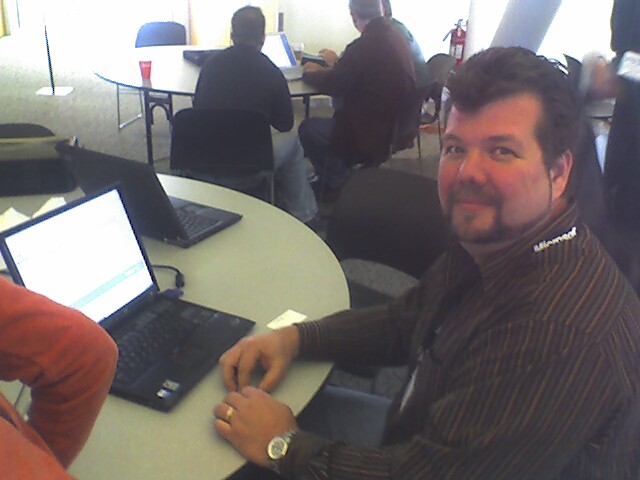 Stewart Nickolas of QEDWiki. IBM’s version of a JotSpot Wiki (very nice).
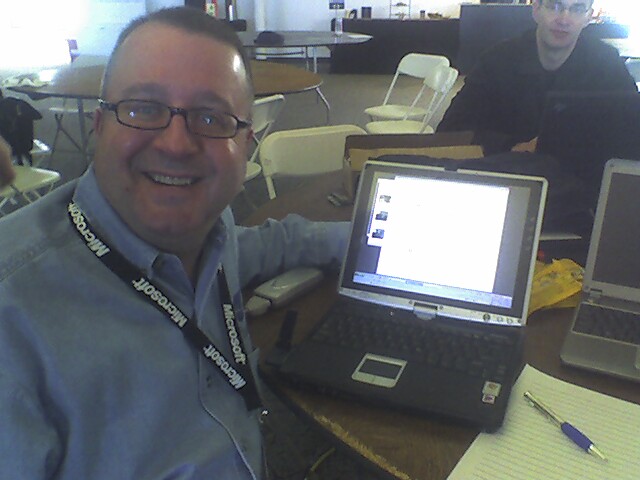 Robert Metcalf with FlySpy. Buy airline tickets by finding your spot on the price curve.
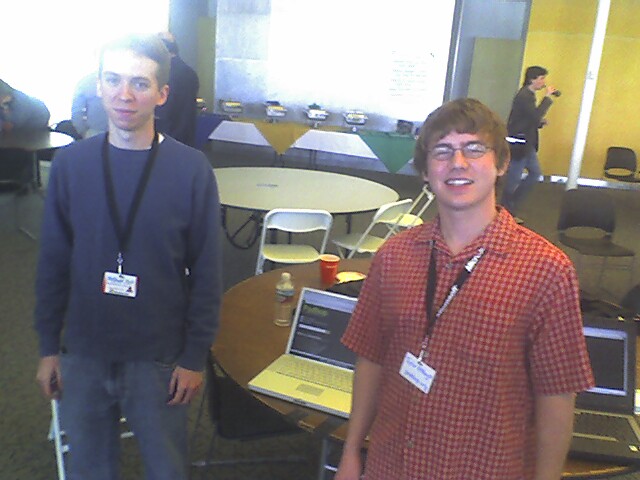 Daniel and Taylor McKnight Podbop.org. Music and events and mp3’s (contenst winners!)
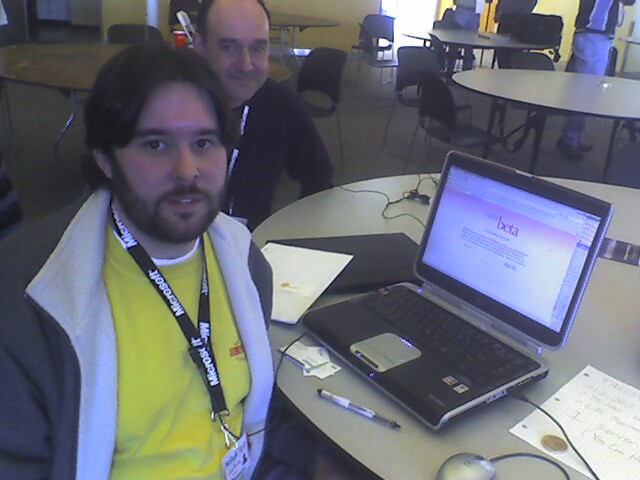 John Herren of Tagcloud.com and Mastrbeta.com. Get tag clouds and get notified of secret betas.
 Chris Radcliff of EVDB. There ware a bunch of EVDB-powered mashups.
 Chao Lam of ClipClip. del.icio.us for copy/pasted web page clippings.
 Adam Trachtenberg with DudeWheresMyCar. Fun eBay/maps mashup.
  Brad Hintze of Bungee Labs. Mashing up Salesforce.com, MS Exchange, maps, and a bunch of others.
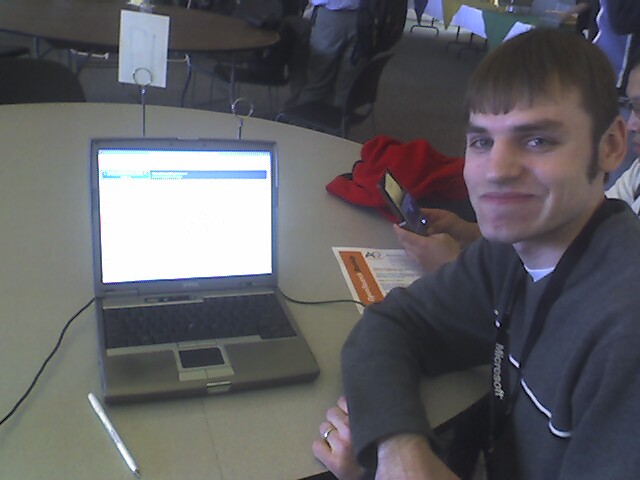 Adrian Holovaty showing Chicagocrime.org. Crime + maps mashup. (My favorite – check it!).
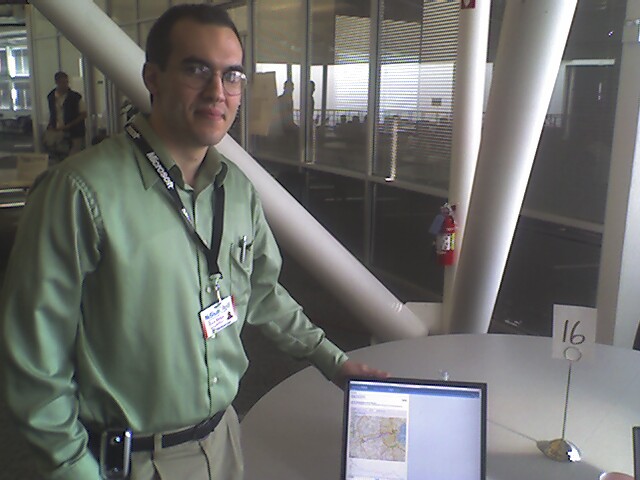 Brian Richer with RunningAHEAD.com. Mashup your exercise or health training program.
And to think I missed 12 others. There were a lot of mashups on display, and I was struck by their overall quality.
From the poll I took, the majority of these were started as hobby sites or to scratch an itch, and have evolved to become either resume sites or sites w/enough traffic that they’re looking to mine some ca$h.
One mashup I demo’d around a bit was a JotSpot Tracker / Upcoming.org / Last.fm mashup that alerts you to touring bands you’re listening to. It’s is a Tim and Abe production and is very cool, but we weren’t quite ready to show it widely yet.
There’s already a signup page for the next mashup camp, details TBA. Attend if you can!
Sunday, February 19, 2006
Heading to Mashup Camp Tomorrow
 I'm heading to Mashup Camp tomorrow morning. Looking forward to it -- I expect to learn a bunch and meet lots of smart new folks.
 I'm still amazed there are 300 confirmed RSVPs for Mashup Camp. There were so many people who didn't sign up in time that SocialText is holding a parallel overflow event called MuchoCamp. Nice!
BTW I'll be the guy with the JotSpot Tournament t-shirt on. Say hi -- I may even have a Tracker mashup to show you if the demo gods are good to us ;)
Tags: mashupcamp
Saturday, February 18, 2006
Love My New Squeezebox
 For years I’ve been running a 50 ft. RCA cable from my PC to my stereo. I just couldn’t bear to sit a PC in the living room, but was sold on the convenience MP3s. At the time there wasn’t a single MP3–based audio product for home systems, so I bought a long cable and waited.
When we recently moved, I decided to pay attention and yes, there are now a ton of options out there. After a bunch of research I opted for the Squeezebox from Slim Devices.
The Squeezebox is a little wifi-powered device that sits on your stereo and talks to a computer running their SlimServer software. It also browses and connects directly to Internet radio stations which is a real plus — looking forward to listening to KCRW.
BTW my second choice was the Sonos player because it’s remote control kicks booty (think color-ipod-as-remote-control). But besides the higher price, they saddle you with an amp that you don’t need. No thanks…
Oh one other cool thing about the Squeezebox is that their software is open source, and there appear to have an active community. E.g. even though the standard remote is a bit boring, they’ve got a ton of remote control plugins.
First Impressions
I set it up this morning and my first impressions are actually mixed. The device itself is beautiful. I also really like the interface, and now that I’ve got it connected it works beautifully.
The setup could have been so easy, but ended up feeling so hard. The main issue was related to my wifi password. I entered it, was given an IP, and all appeared ready to rock. The little wizard took literally 3 minutes to run through after opening the box.
Turns out the IP it gave me was some “fallback” IP (?) and I couldn’t connect to anything. And no helpful error messages.
This started a bit of a wild goose chase to figure out what was wrong w/my setup. Was it connecting to a neighbors network? Did I have a problem w/my router? I turned to the support forums and was blown away by the responsiveness of the community. I think I had 7 answers to my 6 questions in a half hour’s time. Big bonus.
In the end I had a bad password. I wish they would have told me that instead of connecting me to some phantom IP and sending me on a wild goose chase. The only other step was the need to poke 3 holes in my PC’s firewall.
Bug snaggy steup behind me, I love it. They actually do an amazing job of marrying a standard TV-style remote to a big and beautiful display to make it very easy to browse your collection, playlists, etc. The only thing missing is the album art. Hint hint for SqueezeBox v4.
Saturday, February 04, 2006
Need to Take a Simple Poll? Try Quimble
We've been working on a multi-month documentation project over on the JotSpot Developer Connection, and have been thinking about different ways to gather feedback.
A poll is one obvious way, but Google "online poll" and it's a mess of results that I don't feel like wading through.
So last night I was reading the Renkoo blog and came across their poll on calendar preference powered by Quimble. I took the poll, liked the experience, poked around the site, and in 4 minutes had signed up and had a nice little poll of my own on the JotSpot developer blog. Nice!
Now all they need is multi-question polls, and away all us merry pollsters will go.
ps. And check out Renkoo the next time you want to plan your next lunch/dinner/drinks with friends and you can't figure out when everyone can make it or where to go.
Wednesday, February 01, 2006
Collaboration On the Brain
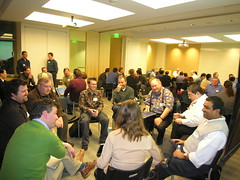
I went to a couple of fun “collaboration” events last week. The first was “How Hackers Collaborate” put on by the SDForum Collaboration SIG (co-chaired by yours truly). The un-panel format put some legendary Silicon Valley DIY “hackers” like Lee Felsenstein (Homebrew Computer Club) and Jim Warren (West Coast Computer Faire) with soon-to-be legendary nu-skool leaders like David Weekly and Jeff Lindsay (SuperHappyDevHouse) to talk about how tech folks get together to get stuff done.
I really enjoyed hearing the juxtaposition of HomeBrew’s “benevolent dictator” model, where Lee would lead an auditorium of people in discussion and then call on and cut off people based on his discretion, with the bottom-up SuperHappyDevHouse/Barcamp model that uses a wiki and paper taped to the wall to organize an event. Cris Messina summed the evening up when he said he feels like history is repeating itself, but in a good way, with new tools and spirit.
The second was the “Tools for Catalyzing Collaboration” workshop last Friday put on by Eugene Kim and Jeff Shults. It was a great group of tool providers and tool users. We spent the day in small groups brainstorming the keys to successful collaboration,
My main takeaway regardless of tool or environment, all successful collaborations require:
- A clear goal
- Aligned self-interests around the shared goal
- Trust that parties are working towards that shared goal ongoing
Seems obvious, almost trite. But I bet if you took an inventory of your life’s current collaborations (w/co-workers, neighbors, business partners, community partners), at least one of these areas would be need shoring up.
Tools need too help ensure this environment is created, or they risk the dust bin. Food for thought for us here at wiki and collaborative app provider JotSpot…
The second key takeaway was the impact of the goal granularity to successful collaborations. Said another way: collaborating around a shared mission can be much less effective than collaborating around a shared project goal.
This was illustrated by the relative success of Democrats vs. the Republicans in the last decade. Democrat constituents try too hard to share mission/philosophy, resulting in stalled action on the ground because of hang-ups around big-picture themes. Republican constituents may differ greatly in overall mission (e.g. Christian right vs. business conservatives), but tend to ignore their differences in high-level mission and instead set granular goals like getting specific bills passed or voters registered. Doh!
I also enjoyed the afternoon brainstorm with Chris and Jeffrey Osborne about creating a permanent co-working space in SF, and how that might spread globally. I want this to happen badly — folks need a creative place to meet, mingle, and work on gettin’ stuff done that’s outside the office and outside the home.
Update: forgot there's a wiki set up for this: http://coworking.pbwiki.com/
collaborationsig, coworking, collaboration
Sunday, January 22, 2006
Mash Pit - Long Live the Hackathon
Chris and Brad hosted Mash Pit (#1) this past week, a day-long hackathon focused on mashups to improve people's lives. Really cool event, sorry I missed it. (Can I trade in a year or two of my server-side C/Java mental archives for some shiny new Javascript or Python?)
I definitely want the Event in a Box that one of the teams put together. Not that I post a ton of them, but when I post an event, why should I have to post to so many diffferent places?
Whuffie Tracker looks tres useful too. I admit it ;)
tags: mashpit
Wednesday, January 11, 2006
Search SIG Bonanza
Search SIG – Search Different: Tagging, Social Bookmarking and Sharing
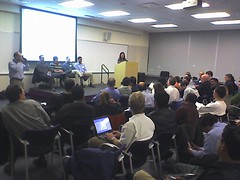 Last night’s Search SIG was a great room-packing event that brought out close to 250 people from my estimate. Nice job Dave and Jeff — I rarely see an SDForum SIG with half that many people. It was also good to run into a bunch of folks I haven’t seen in a while, including Jean Sini of Stickis, David Marks of Loomia.
The panel of founders of “social search” companies del.icio.us, Digg, Wink, and Kaboodle, along with Forrester’s Charlene Li, was a great mix. The discussion centered around tagging and search. A couple points I found interesting:
- Kaboodle is del.icio.us for shopping. I somehow missed that when I saw the demo at TagCamp. Now that I get it, I think Kaboodle will succeed wildly. I’ve already migrated some of my del.icio.us links for a digital media receiver I want to buy to my new DMR page on Kaboodle. Auto-discovering and storing prouct image/description/price info for stuff you’re shopping for is a simple but huge improvement over researching products the “plain link” way.
- A prediction by Charlene Li that there will be a whole ecosystem of services that rate, rank, and measure tags and taggers across the growing set of tag-centric sites. Makes sense if the data is there to be harvested, which it is for the most part it seems to be.
- Del.icio.us’s Josh Schachter had the quote of the night when responding to the question about how to virally grow like del.cio.us did: “Tap into the bored-at-work network.” Brilliant.
- Digg spy rocks — seeing the pulse of the Web in real time is just plain fascinating. But overall Digg desparately needs tags. My eyes bleed when viewing stories by category. It’s just too granular.
Charles Hudson and Brian Cantoni have additional writeups.
Next Collaboration SIG Jan 23rd – How Hackers Collaborate
Speaking of SIGs, the next Collaboration SIG event, How Hackers Collaborate, will be held on Monday January 23rd in Palo Alto.
We’ve got a great lineup including “old school hackers” Lee Felsenstein of the Homebrew Computer Club and Jim Warren of the West Coast Computer Faire, along with some “new school” folks like David Weekly and Jeff Lindsay of SupperHappyDevHouse.
We really want to provide more face to face for attendees, so we’re mixing up the format and doing a “collaborative panel” BrainJams-style. Basically everyone will split up into small table discussions led by our panelists, rotate a couple times to mix and match, and then the panel will get up and hold a traditional panel discussion based on the evening’s converations. We’ll see how it works!
Tags: collaborationsig, delicious, digg, kaboodle, searchsig, wink
Friday, January 06, 2006
Cingular's New Voice Mail System is Aggressively Idiotic
WTF was Cingular thinking when they re-designed their voice mail system late
last year? It definitely gets my vote for the worst product of 2005 — it rubs
me the wrong way every single time I use my phone.
Why? They force you have to listen to the entire length of a message
before you can delete it.
The basic use case for VM is to listen to each message as far as you need to
and then save or delete it. “Oh yeah, heard that already… delete.” or “Don’t
need to hear from him again…delete.”
Imagine designing an email client that forces you to scroll through to the
bottom of each email message and then pause for 5–10 seconds before deleting
it. Aggressively Idiotic.
Thursday, January 05, 2006
First Wiki Wednesday of '06
My calendar finally aligned with a Wiki Wednesday last night and I’m going to make sure it does again in the future — I had a really good time. “JotSpot spy in the house” kidding aside, the Socialtext office with its glass-walled conference rooms (and keg!) is great for these type of gatherings. And with Peter “Twiki” Theony also hanging, there was plenty of good wiki going around.
Much of the conversation revolved around the pros, cons, and approaches of structure and process in wikis, particularly with respect to Microformats.
Kent Bye shared his Echo Chamber Project, who’s goal is to develop collaborative techniques for producing documentary film and news that break the 2–viewpoint ghetto and incorporate the multiple sources that more closely approximate “truth”.
Kent’s developing these techniques by creating a documentary on the run-up to the Iraq war. Wikis and microformats can help track all the details/sources/research/media around a given subject, giving access to primary sources so everyone can vet and contribute. Really cool stuff — gotta hook Kent up with my good friend Bart Cheever who’s putting together San Francisco’s DMAC digital media conference.
We also talked wikis and structure in a more general sense. Ross asserted that, “one man’s/context’s structure or process is another man’s/context’s hard-to-figure-out mess” (my paraphrase). While I agreed to this principle at a high level, my take was it’s human nature to create structure and process, and wikis are a great tool to scratch that itch. Rapidly ramping-up, re-factoring, and re-using structure helps keep it from becoming that impenetrable backwater. If done right. And of course the search for “right” is (and will likely always be) a work in progress.
Looking forward to the first Wednesday next month.
Tuesday, January 03, 2006
Embrace Small Increments in 2006
No, this isn’t a new year’s resolution post. It’s a “things I’m going to try to do or get better at” post.
Don’t ask me what the difference is. But I don’t make resolutions anymore after my earnest resolution last year to ‘get more exercise’ (original, I know) fell so spectacularly flat.
But every year there’s that special period from Christmas to New Years that is so conducive to navel gazing. We’re just exiting that special time, and these themes are top of mind.
Experiment More
No, not the fun-munchies-while-camping-in-Borrego-desert kind of experimentation. More the “try new approach to XYZ and try to measure the difference” kind of experiment. This is inspired in a big way by the culture at JotSpot where I work.
Finish More
I’m tired of having too many un-finished threads in my life. 95% is not finished.
Embrace Small Increments
Somehow I’ve gotten into the habit always judging things (ideas, events, outcomes) based on their “big bang” impact. If something is a small improvement or has less-than-the-end-game effect, I don’t value it or ignore it altogether.
I no longer think this is healthy or wise. This quote by Scott Hampton (by way of Seth Godin) hit the nail on the head:
“If you can't change the little things in your methods, you'll never change the big things. Pick something, make it better. Don't worry if it is just a little thing. If you lather, rinse, and repeat that a few times, you will have made a big difference.”
There are lots of other things swirling in my head, like do my absolute bestest to savor Arielle and Ethan’s young lives, get more exercise, go out on more limbs. But the best approaches seem to all point back to the themes above, particularly embrace small increments.
Happy New Year to you — I’m really looking forward to 2006!
Tags: 2006resolutions
Thursday, December 01, 2005
BrainJams this Saturday in Menlo Park
 Just had lunch with Chris Heuer over at Firewood Cafe. He's gearing up for this Saturday's BrainJam down at SRI in Menlo Park. Chris' energy and passion and sense of can-do are damn inspiring -- I'm looking forward to participating and seeing what unfolds.
If you don't know what a BrainJam is, think speed-dating for jeans and suits (geeks and "biz" people), but where the goal is to meet new people unlike yourself to share, learn, help, and get help.
Tags: brainjams, brainjams3dec2005
Friday, November 18, 2005
Collaboration SIG Kicks-Off Nicely
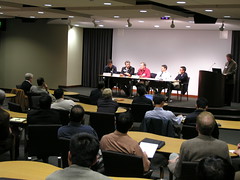
Thanks to everyone who came out Monday night to the kickoff get together of the new SDForum Collaboration SIG. I forgot to count but judging from the pictures, about 50 folks come out to meet, mingle, and hear our panel’s perspective on founding, funding, and growing a successful collaboration-focused company.
David Glazer posted a comprehensive transcript of the event, and there’s also a podcast available. Four days later, three things stand out from the panel’s discussion:
- The SMB market remains huge and untapped for collaboration tools and services. Search engine marketing and software as a service are two promising approaches to profitably marketing and selling into this collection of niches.
- Keep It Simple Smarty. Described variously as the “grandma test” or the “mom test” (what’s with picking on the ladies?), if people can’t start using your product or service and get some value out of it without being trained or reading a manual, don’t bother. This is the obvious one that most everyone ignores to their peril. If this isn’t keeping you up at night, you’re priorities are wrong.
- A great way to explore opportunity in the collaboration space is to solve a problem handled so poorly by email that people would switch to a new solution to ease their frustration.
Cheers to our 5–member panel, who did a marvelous job. It was one of the more interesting panels I’ve attended (not biased of course ;), but in contrast to the other “ad-hoc” events (e.g. Barcamp, 106Miles, BrainJams, SFWIN) I've been attending lately, it felt a bit strange and restricted.
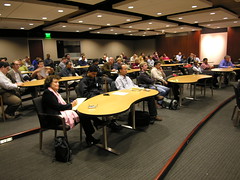
The bottom line is there’s not enough interaction amongst the attendees and also amongst attendees and guest speakers, which I think is crucial for the SIG to grow strong and make a meaningful difference long term. Chris Messina and I car pooled back to SF after the event and had a chance to rap about the balance between structure and audience-driven organization being explored by the various *camp events.
It’s a hard one to navigate — to create something where people who want to lurk and learn can do so while people who want to get more involved can jump in and shape and steer the event, even if they’re not part of the "official” group of organizers. The SIG wiki will help a bit here.
Ultimately I agree with Chris’ sentiment that once you go ad-hoc, you can never go back. We’re looking forward to experimenting and mixing it up in the future. Next event in January — details TBA.
Tags: collaborationsig
Thursday, November 10, 2005
New SDForum Collaboration SIG
The new SDForum Collaboration SIG kicks off next Monday night (14th) with a panel discussion called Show Me the Money.
It’s a pretty stellar panel with Joe Kraus of Jotspot, Dave Hornik of August Capital, William Glazier of Redwood Ventures, David Coleman of Collaborative Strategies, and Sam Pullara of Gauntlet Systems
“Where is the business and investor focus in Business Collaboration today? Join our panel of representatives from current Business Collaboration ventures as they explore and discuss "Where is the money?" From platforms to ASP services and free collaborative services, a wide spread of business collaboration ventures are currently in the market. And they are getting funding ranging from seed money to name brand VC investment stakeholders.”
It’s next Monday November 14th at Silicon Valley Bank in Santa Clara. I’m looking forward co-chairing the SIG along with Patti Wilson and Charles Welsh.
Check out the SIG blog and wiki for more info and to get involved. Hope to see you Monday night!
Tags: collaboration, sdforum, sig, collaborationsig
Wednesday, October 26, 2005
First JotSpot Meetup Thurs Oct 27th
JotSpot’s having its first meet and greet tomorrow night (10/27) and you’re invited. Come on by the Blue Chalk Cafe (630 Ramona St.) in Palo Alto around 7p. We’ll be upstairs by the BAR hanging out.
RSVP on my post on developer.jot.com or on Upcoming.org, Eventful.com, or Zvents.com.
Friday, October 14, 2005
The Craftsman Approach to Web Design
We're in the process of becoming homeowners again, this time in San Francisco. It's a 1911 Edwardian, a style related in era to the Arts and Crafts (or Craftsman) arts and architecture movement. Edwardians are much less ornate than Victorians, but not to the level of organic simplicity of Craftsman homes, which are all about organic simplicity.
Escrow is a stressful period, but it's also filled with anticipation of new beginnings. To get some ideas and have fun looking at old pictures, Rebecca and I busted out our old home books the other night, including a reproduction of Gustav Stickley's 1912 More Craftsman Homes.
While reading Stickley's preface, I was struck by language that sounded like it could have been written in 2005 about web application design:
"The Craftsman type of building is largely the result not of elaboration, but of elimination. The more I design, the more sure I am that elimination is the secret of beauty in architecture. By this I do not mean that I want to think scantily and work meagerly. Rather, I feel that one should plan richly and fully, and then begin to prune, to weed, to shear away everything that seems superfluous and superficial."-Gustav Stickley, 1912
Like they say, good design never goes out of style. That said, it's definitely easier said than done, whether in a home or on the web.
Thursday, September 22, 2005
DIY Publishing at Webzine 2005 This Weekend
Webzine 2005 is happening this Sat and Sunday in San Francisco, and if you're into blogging, *casting, web design, or any kind of DIY webby stuff, you should check it out. Oh, and parties too.
It's $20ish bucks but don't let that scare you away -- there's going to be some amazing sessions, including:
- Making Media With Open Source Publishing Tools
- Podcasting: The Democratization of Broadcast?
Using the Internet to Kick the Man's Ass - Around the Corner: Neighborhood Blogging
- Blog Warez Dance Off!
There's also a conference wiki (thanks JotSpot) and IRC channel to connect with folks before, during, and after the event.
tags: webzine2005
Wednesday, September 21, 2005
Antony and the Johnsons
I saw Antony and the Johnsons last night at the Palace of Fine Arts. It was so so soooooo good I just have to gush a little.
If you don't know Antony, he's british-born, NYC based, a recent surprise winner of the Mercury prize, and has a voice that truly defies categorization. Close your eyes and imagine Nina Simone meets Sigur Ros meets Boy George. The music is sparsely arranged piano, violin, cello, and electric bass, but really -- it's all about his voice. He's got an amazing ability to manipulate silence and emotion with his crazy voice. Not since seeing Sigur Ros in 2001 have I been so blown away by a live performance.
The guy's got a pretty unique sense of showmanship as well. Half way through he enticed the audience to whistle a certain low-tone in harmony, and then used it as a background for his solo. He also engaged in a self-deprecating improvised story-song about a couple of crabs on an island and their relationship with a coconut. Don't ask. It worked. To hear him speak a phrase in a normal voice, and then sing that same phrase in his singing voice, is mind-bending.
Thursday, July 21, 2005
On The Living Dead of Blogs and Startups
Ran across Will Hsu's Dead Blogs Walking post and it resonated with me on a both the startup and blog level. Will relates the, "fail fast" philosophy to blogs by pointing to a few blogs experiencing blog-post-atrophy. Applied to blogs, the theory says these blogs deserve a dignified bullet in the head death rather than live on with infrequentlyupdateditis.
"So I say this to these bloggers, treat your blog like a startup - dont
let your labor of love become labor of lame. Update more frequently or
shut it down completely. Other options include join something like
AlwaysOn where you can contribute to a community instead or opening up
your blogs to more contributors to keep it fresh. In the end, no one
likes the living dead."
RE: blogs, I completely disagree. First off, what does "shut it down" mean? Wipe it clean from the web? Hope not. Kill it with a "here's my bullet" post and then never return? Maybe, but what's the point of that if a month... or three later you've got something to say?
Besides losing your once-frequent readers, we've got Google and tags and PubSub and Technorati to keep people connected, so I say keep it up -- keep it going. If the point of blogging is to participate in conversation, I don't think fail fast applies. Conversation isn't a contest, and you haven't failed if you don't find yourself posting as frequently as you once did.
RE: startups, I wholeheartedly agree with fail fast. When I founded Inovie Software and launched TeamCenter in 1997, I didn't think 4 years later we would only have 15 employees and a couple million in revenue. Heck we were supposed to grow wildly like seemingly everyone else. But that didn't happen -- bootstrapping can be a slow process.
Yes I was constantly reminded and fearful we were becoming the "living dead." I guess you could say we were given our numbers. In the end we were acquired in a relatively small deal and thus not forced to experience limb loss of the "truly" living dead.
So did Inovie fail fast? 4 years ain't fast. And despite not experiencing wild success, I don't consider it a failure at all. But yes, I would have liked to done the same in 2 years and gotten back on the horse for a second go during that period of my life. Didn't happen, but I learned.
So fail fast is indeed a great mode for startups, but as Fred Wilson points out, it's "rarely that simple."
Thursday, June 30, 2005
OpenEvents and Microformats
Seems like all my blogging-love has been going to the JotSpot Developer Blog lately... *Sigh*. Don't get me wrong, I love writing there because I can combine my passion for collaboration software with my admiration for Jot's amazing capabilities and a growing Jot developer community.
But there's something about writing here on ehick that I've missed -- a place to write out loud more wholistically and randomly about stuff. Niall Kennedy of Technorati and I were talking about this last week at Gnomedex -- even when your personal and professional interests overlap hugely, there's satisfaction in making and maintaining a distinction. So I think I'm back!
Speaking of Gnomedex, after a week's rumination on my initial thoughts and listening to the conversation about "How do you design a remixable Web application?", my long-term takeaway is a renewed interest and sense of importance of Microformats (explained).
Funny because there wasn't an explicit talk about them, but the moment the Microsoft dudes started demoing Outlook subscribed to a custom RSS "calendar feed" using iCal files in enclosures, I thought of Microformats and hCalendar. Others did too. Kevin Marks wrote to this effect soon thereafter, as have many folks since. Adding additional semantic mark up to XHTML makes too much sense for these types of use cases.
Ever since my Google/Internet Arcive meet Mr. Event post last year I remain personally fascinated with "OpenEvents" and the event space in general, even thought I've lagged in keeping up with what's being said and done. EVDB is supporting hCalendar and just launched their new API. Upcoming.org seems to be cranking and has an API. Trumba's all shiny and new, but not sure they're going the Microformat way...?
All cool stuff, happening quickly. At the very least I'm going to consume more of this myself to get the user's perspective.
Wednesday, April 20, 2005
Rojo 2.0 Rocks
Rojo just launched a totally new rev of their RSS feed reading service with a totally redesigned UI based around tags. Tag love continues, and for good reason. I've only spent 5 minutes with the new offering, but initial impressions say I'm finally motivated to move off my Caltrain-commuter-friendly Newsgator to an online service. (Can we get syncing with some offline reader at some point pretty please? Until then, I'll just use Slogger.)
I test-drove Rojo 1.0 right after it was launched in October, but didn't have the same reaction back then. It was good but not there. The new UI is much improved, and tags just plain work for me. Nice! (See Jeff Clavier's post for more depth look.)
Wednesday, March 16, 2005
ETECH: Remixing Wikis with Rendezvous, Web Services and SchoolTool
Just heard an excellent ETECH presentation titled, "From the Classroom: Remixing Wikis with Rendezvous, Web Services and SchoolTool". Lewis Elementary School in Portland, Oregon are using wikis (Instiki) and some basic web services to provide an interactive, low-budget teaching "intranet."
Basically they have teachers run Instiki on their laptop, then students in a lab use Mac's Rendezvous to connect to the teacher's laptop & create and submit their schoolwork on the teacher's wiki. The teach can then take home and read/grade/comment on schoolwork.
Teachers and kids love it. They love it because it's easy and it works.
Then the needed to integrate w/other systems, e.g. the class rosters or student profiles are located on a different system. They're using SchoolTool, an open source school management program, and then using web services to hook up the wiki so it syncs with the other IT systems used by teachers. (SchoolTool reminds me a bit of CivicSpace.)
Then they needed a calendar, so the turned to "SchoolBell" -- a calendar server that is part of SchoolTool, and again use web services to tie the calendar to the wiki.
This is awesome stuff. It's great to see an elementary school principal talk about how they're mixing technologies to self-serve a better way to teach students. And this is bottom up -- they bypassed the school district's grand plans for infrastructure that will be purchased "some day soon" and put something together today.
Friday, March 11, 2005
OpenXource Helps Open up Closed Source Software
I had the pleasure of coffee Bob McWhirter (blog) yesterday. Bob is the guy behind codehause.org, home to open source projects such as Groovy, Jaxen, and ActiveMQ among many others. Bob recently founded OpenXource, a consulting and product company focused on helping companies move closed source software to open source.
Helping with the strategy and execution of moving closed source to open source is an undeserved market according to Bob, and I agree with him. Folks like Sourcelabs and Spikesource are going the other direction, helping companies bring open source in. I don't know of anyone else specializing in the other way around.
And while perhaps a smaller market, it's a much harder problem IMHO. I had a taste of this helping Orbeon transition their presentation server product to open source, and of course their biz model too. Oh yeah, that thing. They've since joined ObjectWeb and their community and biz is on the rise, but going it alone, without the benefit of experience, is difficult.
Behind raw adoption numbers, the next most important metric of an open source project's success is the size and health of its dev community. OpenXource is addressing this with a hosted community service called Xircles. Its Open source community in a box, leveraging the insights gained starting, growing, and managing codehaus.org. They've got to differentiate from the Collabnet's, sourceforge's, and GForge of the world, but there seems to be room to innovate there for sure. This is a needed service, and I wish Bob and OpenXource success!
Subscribe to:
Posts (Atom)